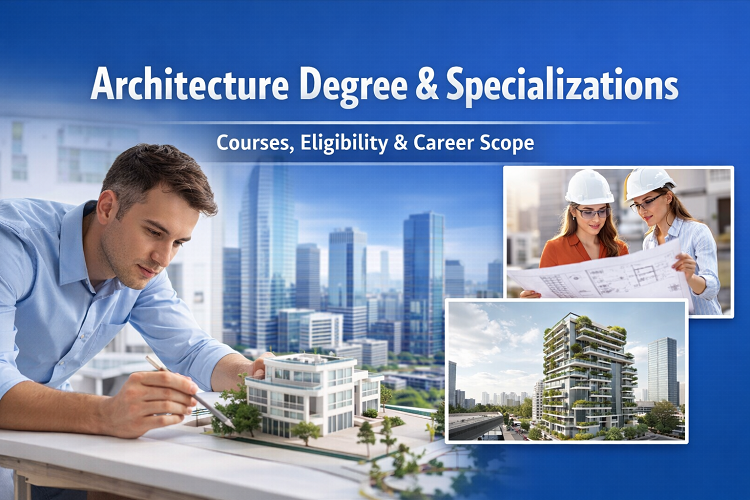
Architecture Degree & Specializations: A Complete Guide for Aspiring Architects
An Architecture degree prepares students to design, plan, and construct functional and sustainable spaces. The program focuses on architectural design, structural planning, urban development, and environmental sustainability. Graduates can pursue careers as architects, urban planners, interior designers, and project consultants across public and private sectors.
An Architecture degree is a professional program that blends creativity, technology, and design to shape the built environment. Architecture is not just about constructing buildings it is about creating functional, sustainable, and aesthetically pleasing spaces that improve the quality of life. With rapid urban development and smart city projects, architecture has become one of the most promising and respected career paths globally.
What is an Architecture Degree?
An Architecture degree focuses on planning, designing, and constructing buildings and structures. The most common undergraduate program is the Bachelor of Architecture (B.Arch), which typically spans 5 years and includes both academic study and practical training. Students learn architectural design, structural systems, construction technology, environmental studies, and urban planning.
To become a licensed architect in India, graduates must register with the Council of Architecture (COA) after completing the degree.
Eligibility for Architecture Courses
To pursue a Bachelor of Architecture (B.Arch), students must meet the following criteria:
Completion of 10+2 with Physics, Chemistry, and Mathematics (PCM)
Minimum qualifying marks as specified by institutions
Qualification in entrance exams such as NATA or JEE Main (Paper 2)
Architecture Course Curriculum
The architecture curriculum combines theoretical knowledge with hands-on experience. Key subjects include:
Architectural Design
Building Construction & Materials
Structural Engineering
Architectural Drawing & Graphics
History of Architecture
Environmental Studies
Urban Design and Town Planning
Sustainable Architecture
Students also work on design studios, live projects, and internships to gain real-world exposure.
Popular Architecture Specializations
Architecture offers a wide range of specializations that allow students to shape their careers based on interests and industry demand:
Urban Design & Planning – Focuses on city planning and public spaces
Landscape Architecture – Design of outdoor spaces and environmental landscapes
Interior Architecture – Planning functional and aesthetic interior spaces
Sustainable Architecture – Eco-friendly and energy-efficient building design
Industrial Design – Designing functional products and structures
Conservation Architecture – Restoration and preservation of heritage structures
Career Opportunities After Architecture
An architecture degree opens doors to diverse career paths across multiple sectors:
Architect / Design Consultant
Urban Planner
Interior Designer
Landscape Architect
Project Manager
Construction Manager
Urban Development Consultant
Academic or Research Professional
Architects can work in architectural firms, construction companies, government departments, real estate firms, or start their own practice.
Scope of Architecture in India and Abroad
With rapid infrastructure development, smart cities, and sustainable construction initiatives, the demand for skilled architects is increasing. Architects also have opportunities to work internationally after meeting licensing requirements in respective countries.
Why Choose Architecture?
Combines creativity with technical skills
High demand across public and private sectors
Opportunities for innovation and sustainability
Global career scope
Professional recognition and long-term growth
An Architecture degree is ideal for individuals passionate about design, innovation, and shaping the future of urban environments. With diverse specializations and strong career prospects, architecture offers a fulfilling and dynamic professional journey. Choosing the right specialization and institution can lead to a successful and impactful career in the built environment.