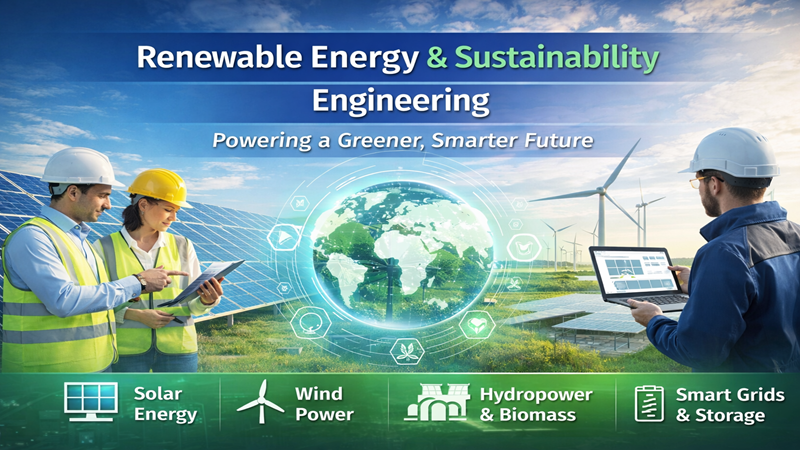
Renewable Energy & Sustainability Engineering: Powering a Greener, Smarter Future
Renewable Energy & Sustainability Engineering focuses on designing clean power systems and eco-friendly technologies. This fast-growing field offers global careers in solar, wind, smart grids, and sustainable infrastructure development.
As the world faces climate change, rising energy demands, and environmental challenges, Renewable Energy & Sustainability Engineering has emerged as one of the most important and future-focused engineering fields. This discipline focuses on designing clean energy systems that reduce carbon emissions, conserve natural resources, and create long-term environmental balance.
From solar and wind power to smart grids and energy storage solutions, sustainability engineers play a key role in building a cleaner, more resilient global energy system.
What is Renewable Energy & Sustainability Engineering?
Renewable Energy & Sustainability Engineering combines engineering principles with environmental science to develop energy solutions that are efficient, eco-friendly, and economically viable.
Core Areas of Study
Solar energy systems
Wind power technology
Hydropower & bioenergy
Energy storage & battery systems
Sustainable infrastructure design
Energy efficiency & smart grids
The goal is to replace fossil fuels with renewable resources while optimizing energy use across industries and cities.
Why This Field is Growing Rapidly
Global governments, businesses, and industries are investing heavily in clean energy to meet climate goals and reduce pollution.
Key Growth Drivers
✔ Climate change awareness
✔ Government renewable energy policies
✔ Rising electricity demand
✔ Declining cost of clean technologies
✔ Corporate sustainability commitments
As a result, renewable energy engineers are among the most in-demand professionals worldwide.
Career Opportunities in Renewable & Sustainability Engineering
Graduates can work across energy, construction, technology, and environmental sectors.
Popular Job Roles
Renewable Energy Engineer
Solar Power System Designer
Wind Energy Analyst
Sustainability Consultant
Energy Efficiency Engineer
Environmental Project Manager
Smart Grid Engineer
Industries Hiring
Renewable power companies
Infrastructure firms
Government energy departments
Environmental consultancies
Green technology startups
Manufacturing and utilities
Essential Skills for Success
To thrive in this field, professionals should develop:
Strong engineering fundamentals
Energy modeling and system design
Environmental impact analysis
Data analytics for energy efficiency
Project management skills
Knowledge of sustainability standards
Problem-solving and innovation mindset
Global Scope & Future Demand
Renewable energy is becoming the backbone of future power systems worldwide. Engineers in this field can find opportunities across:
Solar farms and wind parks
Smart cities and green buildings
National power grids
Industrial sustainability projects
Environmental research organizations
With the global shift toward net-zero emissions, career demand will continue rising for decades.
Benefits of Choosing This Career Path
High-growth industry
Global career mobility
Strong job security
Competitive salaries
Positive environmental impact
Continuous technological innovation
Final Thoughts
Renewable Energy & Sustainability Engineering is more than a career it’s a mission to protect the planet while meeting future energy needs. As clean energy becomes central to economic development, skilled engineers will lead the transformation toward a greener world.
For students seeking a high-impact, future-proof profession that combines technology, innovation, and environmental responsibility, this field offers outstanding long-term opportunities.