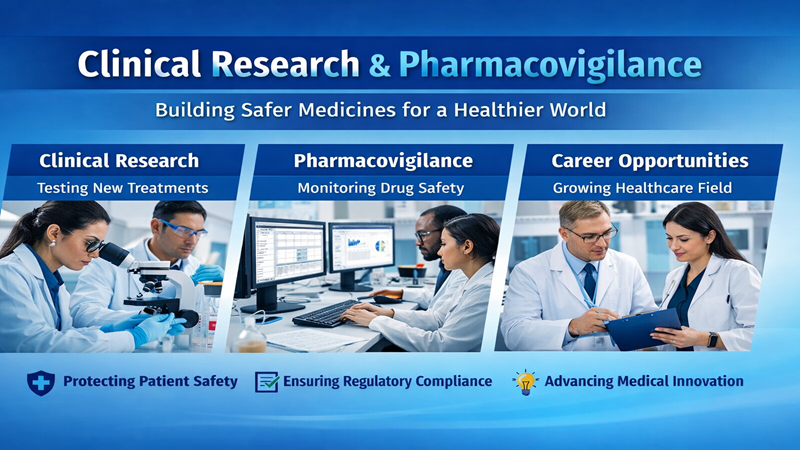
Clinical Research & Pharmacovigilance: Building Safer Medicines for a Healthier World
Clinical Research & Pharmacovigilance focus on developing safe medicines and monitoring drug safety worldwide. This fast-growing healthcare field offers high-demand careers in pharmaceutical research, clinical trials, and patient safety management.
The healthcare industry is continuously evolving, driven by innovation in medicines, vaccines, and medical technologies. Behind every safe and effective drug lies a rigorous system of clinical research and pharmacovigilance two critical pillars that ensure treatments improve lives without compromising patient safety.
Clinical Research & Pharmacovigilance professionals play a vital role in developing new therapies, monitoring their effects, and protecting public health. With increasing global demand for safer medicines and strict regulatory standards, this field offers excellent career growth, job stability, and meaningful impact.
What is Clinical Research?
Clinical research involves systematic studies conducted on human participants to evaluate the safety, effectiveness, dosage, and side effects of new drugs, vaccines, and medical devices. These studies are essential before any product reaches the market.
Key Phases of Clinical Research
Preclinical Studies
Laboratory and animal testing to assess basic safety
Phase I Trials
Testing on small groups of healthy volunteers
Phase II Trials
Evaluating effectiveness in patients
Phase III Trials
Large-scale testing for final approval
Phase IV Trials
Post-marketing studies for long-term safety
Clinical research ensures evidence-based healthcare solutions that meet global quality standards.
What is Pharmacovigilance?
Pharmacovigilance focuses on the detection, assessment, understanding, and prevention of adverse effects related to medicines. Once a drug enters the market, continuous monitoring is required to ensure patient safety.
Core Responsibilities in Pharmacovigilance
Monitoring adverse drug reactions (ADRs)
Analyzing safety data
Preparing risk management plans
Reporting to regulatory authorities
Improving drug usage guidelines
This process helps identify rare side effects and ensures long-term safety of medications worldwide.
Why Clinical Research & Pharmacovigilance Are So Important
✔ Protect patient safety
✔ Ensure regulatory compliance
✔ Improve drug quality
✔ Build public trust in medicines
✔ Support innovation in healthcare
Together, these fields form the backbone of modern pharmaceutical development.
Career Opportunities in Clinical Research & Pharmacovigilance
This sector offers diverse roles across pharmaceutical companies, hospitals, research organizations, and regulatory bodies.
Popular Job Roles
Clinical Research Associate (CRA)
Clinical Trial Coordinator
Drug Safety Associate
Pharmacovigilance Officer
Medical Data Analyst
Regulatory Affairs Specialist
Industries Hiring
Pharmaceutical companies
Biotechnology firms
Contract Research Organizations (CROs)
Hospitals and research centers
Healthcare consulting firms
Skills Required for Success
Strong understanding of medical terminology
Attention to detail and documentation skills
Data analysis and reporting
Knowledge of regulatory guidelines
Communication and teamwork
Ethics and patient safety awareness
Future Scope & Industry Demand
With increasing global clinical trials, rising healthcare investments, and stricter drug safety regulations, the demand for trained professionals is growing rapidly.
Clinical Research & Pharmacovigilance careers offer:
📈 High growth potential
🌍 Global job opportunities
💼 Competitive salaries
🧠 Continuous learning
❤️ Meaningful contribution to public health
Overall Insights
Clinical Research & Pharmacovigilance are essential to creating safer, more effective medicines that improve millions of lives. As healthcare innovation accelerates, professionals in this field will continue to play a crucial role in shaping the future of medicine.
For students and professionals seeking a rewarding healthcare career that combines science, safety, and social impact, Clinical Research & Pharmacovigilance offer a powerful and future-ready pathway.