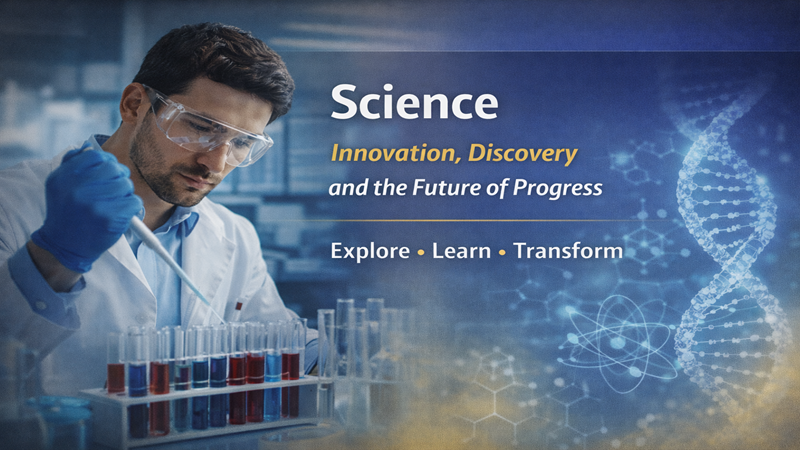
Science: Driving Discovery, Innovation, and Progress
Professional content focused on scientific discovery, innovation, education, and career opportunities across major science fields.
Science is the foundation of human advancement. From understanding the natural world to developing life changing technologies, science shapes how we live, work, and solve global challenges. It encourages curiosity, critical thinking, and evidence‑based decision‑making, making it essential for personal growth and societal development.
The Importance of Science in Everyday Life
Science influences nearly every aspect of modern life healthcare, communication, transportation, energy, and environmental protection. Medical research saves lives, technological innovations improve efficiency, and scientific understanding helps protect natural resources.
Through observation, experimentation, and analysis, science allows us to understand complex systems and develop solutions that improve quality of life.
Major Fields of Science
Science includes diverse disciplines such as physics, chemistry, biology, environmental science, computer science, and space research. Each field contributes unique knowledge while working together to solve real‑world problems.
Interdisciplinary science has become increasingly important, combining technology with biology, data with healthcare, and engineering with sustainability.
Science in Education and Career Development
Studying science builds strong analytical, problem‑solving, and research skills. Students learn how to think logically, evaluate evidence, and apply knowledge practically.
Career opportunities in science include research scientists, lab technicians, healthcare professionals, data analysts, environmental consultants, educators, and engineers. With growing demand for innovation, science careers offer stability and long‑term growth.
The Future of Science
Emerging fields such as artificial intelligence, biotechnology, renewable energy, and space exploration are shaping the future. Science continues to address major global challenges including climate change, disease prevention, and sustainable development.
Science is not just a subject it is a way of understanding the world. By promoting curiosity, discovery, and innovation, science empowers individuals and societies to build a better future. As technology advances and challenges evolve, science will remain the driving force behind progress and human development.